
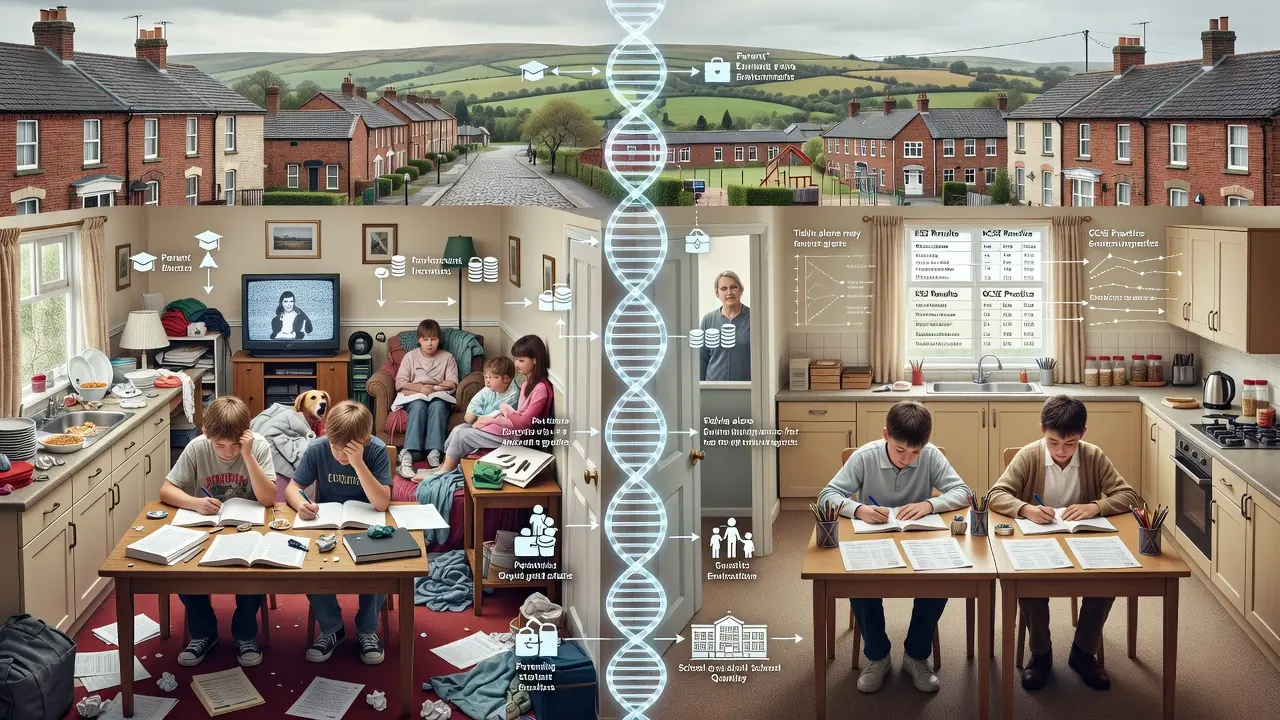
A study of British twins finds that the familiar link between noisy, disorganized homes and lower school performance is largely not caused by the chaos itself. Instead, shared genetics and family-level conditions appear to account for much of the connection, according to research published in the journal Learning and Individual Differences.
Why the Link Looked Causal
Earlier research consistently found that children living with high household chaos, meaning frequent noise, crowding and little daily routine, tend to achieve less in school. It is easy to assume the disorder distracts children and directly hurts their learning. But the relationship between a child's surroundings and development rarely runs in only one direction. Strong students may bring focused habits home, and children who struggle academically may contribute to a more disorganized household.
What the Twin Study Measured
A team led by Sophie von Stumm at the University of York analyzed data from 7,591 twin pairs born in the United Kingdom in the mid-1990s. Identical twins share all their genes, while fraternal twins share about half of their segregating genes, which lets researchers estimate how much of a trait reflects genetics versus shared or individual experiences. Children reported on household chaos at ages nine, twelve and sixteen, while teacher ratings and standardized national exam scores tracked educational achievement.
Higher chaos at early ages predicted lower achievement later, and lower achievement predicted more chaos later. These effects were relatively small. Once the researchers separated genetic and environmental pathways, however, they found the associations were largely explained by family-level factors rather than by chaos or achievement acting on each other directly.
Genes and Shared Environments
- After adjusting for parents' education, occupation and income, the path from early achievement to later chaos was fully explained by shared genetics.
- The path from early chaos to later achievement was fully explained by shared environmental factors, and adjusting for socioeconomic status did not change that result.
The researchers suggest the remaining shared factors could include neighborhood conditions, the quality of local schools or particular parenting styles, though the study did not directly test these.
Limits and Practical Takeaways
The study relied on a shortened six-item questionnaire and on children's own reports, which may reflect internal distress as much as objective noise or crowding. The statistical model also cannot fully separate differences between individuals from changes within one person over time, so it is hard to predict how a specific change would alter one child's trajectory. For families, the findings suggest that simply tidying a home or reducing noise may not by itself improve grades. Identifying which shared environmental factors matter most remains the next research step.