
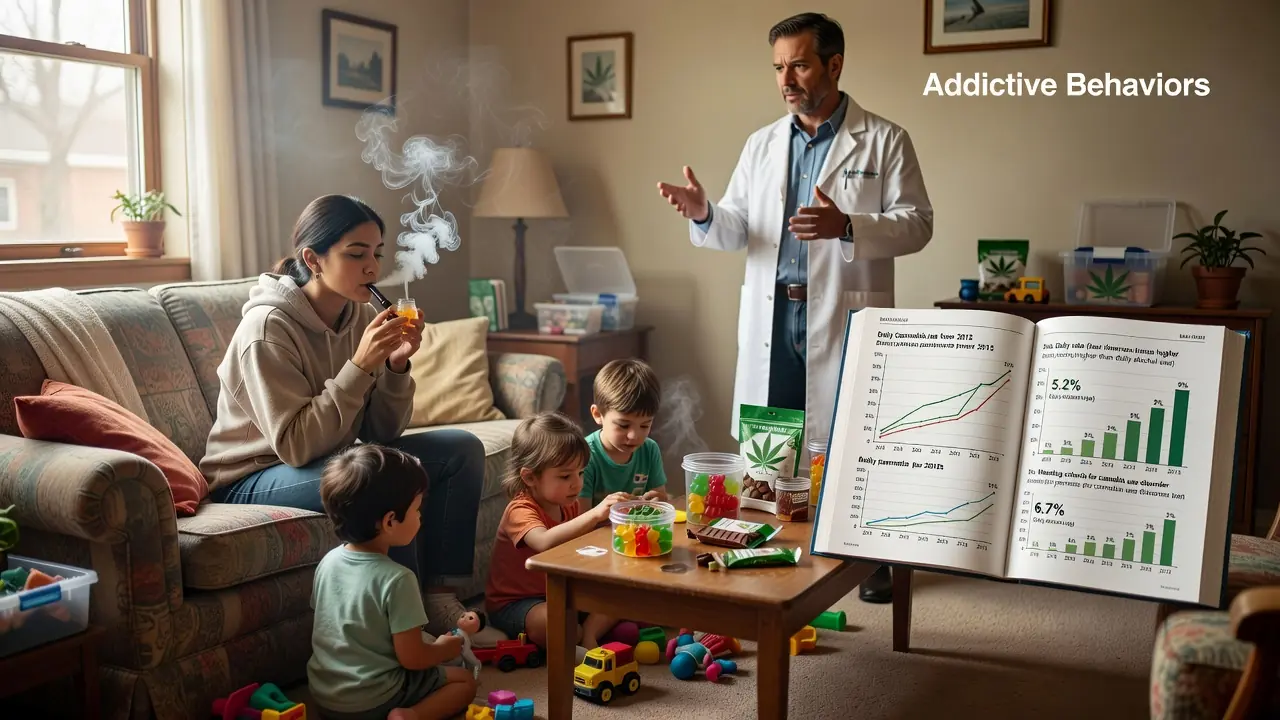
Cannabis use has climbed sharply among American parents over the past dozen years, and researchers estimate that at least 5.9 million U.S. children lived with a parent who used marijuana on most days in 2024. The rise raises practical questions for households about child safety, accidental exposure and the example adults set at home.
What the numbers show
Researchers from the University of California, San Diego, analyzed data from the National Survey on Drug Use and Health, which covered nearly 482,000 people ages 12 and older. By 2024, 8% of parents reported using cannabis on most days, 5.2% used it daily, and 6.7% met the criteria for cannabis use disorder. The daily use rate among parents was about four times the rate of daily alcohol use, according to the study, which was published in the journal Addictive Behaviors.
The largest increases appeared among younger parents, unmarried parents, people in lower-income households and those without a four-year college degree. Still, the researchers noted that growth occurred across nearly all demographic groups.
Why parents' use draws attention
Dr. Jarid Pachter, a family and addiction medicine physician at Stony Brook Medicine in New York who was not involved in the study, said cannabis has become so socially accepted that some people overlook its risks. He pointed out that children whose parents use marijuana are more likely to use it themselves as they grow older. He stressed that this association does not prove parental use causes a child's use.
THC, the main psychoactive compound in marijuana, can affect attention, memory, coordination and reaction time. Pachter said that matters most when a parent must respond quickly to a young child's needs, and that the concern is impairment during child care rather than cannabis use itself.
Storage, edibles and secondhand smoke
Accidental ingestion is a particular worry with edibles such as gummies or chocolate, which can resemble ordinary candy. Pachter said emergency room visits involving children who accidentally consume marijuana have risen significantly. Some children become severely sedated, confused or unsteady on their feet, and in more serious cases they develop breathing problems and need hospital care.
Smoke exposure is another consideration. Pachter noted that marijuana smoke contains many of the same harmful chemicals found in tobacco smoke, and that children can be exposed to THC secondhand. He added that the long-term health effects of such exposure are still being studied.
Limits of the research
The study did not measure parenting quality or children's health, so it cannot establish that parental cannabis use causes harm to children. It also relied on self-reported substance use, which can be affected by memory or reluctance to disclose. The researchers called for further work on whether the frequency of parental use, cannabis use disorder, household exposure and storage practices are linked to children's health or development. The study received funding from the California Department of Cannabis Control, the Canadian Institutes of Health Research, the National Institute on Drug Abuse and the National Institute on Alcohol Abuse and Alcoholism.