
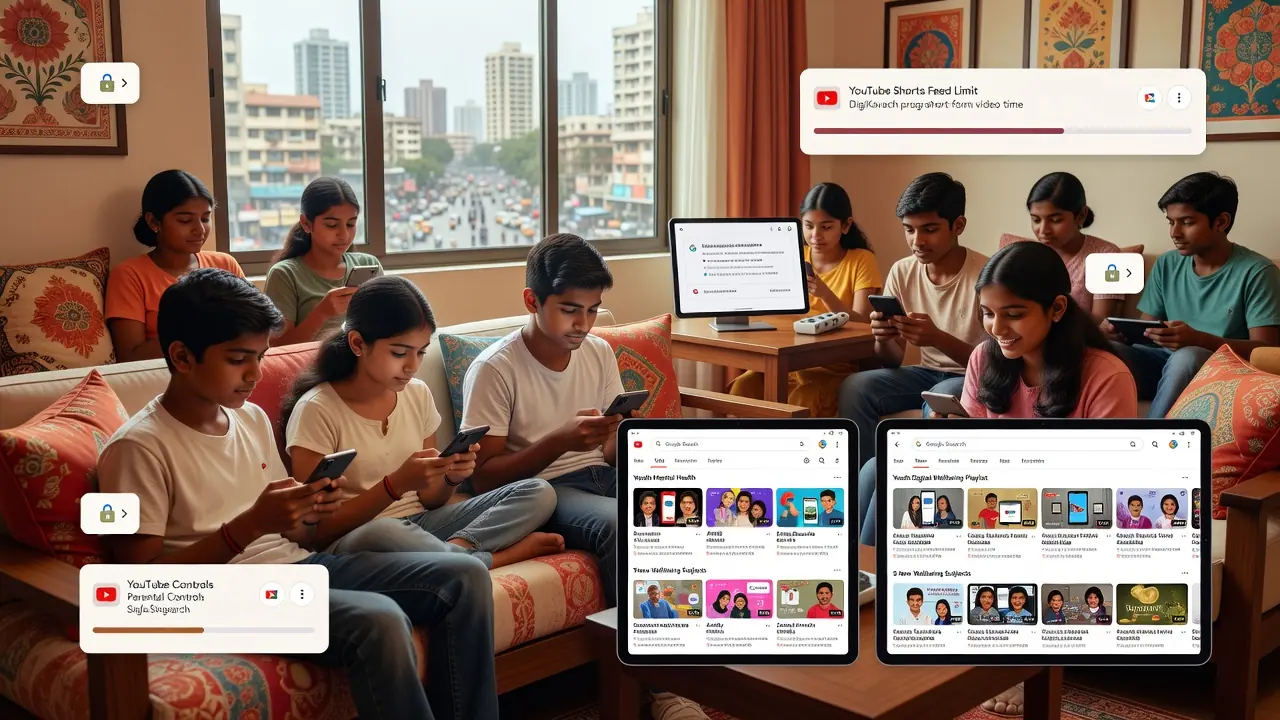
Google is widening its digital wellbeing work in India with a new playlist for teens, expanded mental health content on YouTube and more parental controls. The changes aim to help young users build steadier screen habits while giving families more ways to supervise what their children see and do online.
A playlist focused on healthier screen habits
The company has launched a Youth Digital Wellbeing Playlist featuring videos from Indian learning and family creators. The content offers practical strategies for setting healthy screen-time limits, building daily routines and reducing distractions. Google says the initiative is not about banning devices but about helping young people make more responsible choices online, including skills for navigating a world increasingly shaped by AI.
Expanded mental health topics for users aged 13 to 17
Google has added five new topics to the mental health shelves on YouTube in India, a feature first launched in the country last year. When teenagers search for specific mental health queries, the platform displays a dedicated segment of supportive, age-appropriate videos from reputable health organizations and certified experts. Google says clinical psychologists review videos before they are added. The existing collection already covers depression, anxiety, attention-deficit/hyperactivity disorder (ADHD) and eating disorders.
Parental tools available to families
Several controls sit alongside the new content. Parents can use the YouTube Shorts Feed Limit, promoted under the company's DigiKavach program, to restrict how much short-form video their teens watch. Google Family Link lets parents approve or block apps, track device location and set time limits for connected devices. Android Parental Controls allow families to lock certain settings with a PIN on a child's device, and SafeSearch filters explicit results on Google Search.
What the tools can and cannot do
Together, these features give parents several options for managing a child's online activity, and they reflect broader concern about excessive screen time, online distractions and exposure to inappropriate material. Filters and time limits reduce risk but do not replace ongoing conversations at home about how young people use technology. The effectiveness of each setting will depend on how families configure and maintain it.